
Recommended Custom Yoga and Pilates Mats That Have Been Tested at Numerous Sponsored Events
By Nadya Y. D. Prameswari | November 22, 2026

Yoga and Pilates mats are often considered simple pieces of equipment, yet at a sponsored event, they work quite hard and effectively. Mats are laid out on floors that aren’t necessarily level, used by dozens to hundreds of participants, then rolled up, cleaned, and set up again for the next session. For this reason, choosing mats for a sponsored event should start with the participants’ comfort, followed by color and logo.
MinGoena has compiled answers to the most frequently asked questions when brands or organizers are planning their mat needs: what is the ideal thickness, what material should it be made of, can one mat be used for two different types of classes, and is it better to lend them out or give them away?
Why Yoga and Pilates Mats Are Ideal for Sponsored Events
Most event merchandise is received at the end of the event and then stored away. Mats work differently because participants use them directly throughout the session. The brand’s logo appears in participants’ photos, videos, and social media posts—without even being asked.
According to anAlodokter review on Pilates mats, this exercise relies on one’s own body weight, making the mat the primary piece of equipment used throughout the session. This means that every minute of the workout is exposure time for the brand featured on its surface.
There are two common ways to incorporate mats into event sponsorships. First, mats are distributed to participants as take-home merchandise. Second, mats are loaned by the vendor during the event and returned after the session ends—a model used by Goenakan Indonesia at wellness events, which will be discussed below.
The rental model means organizers don’t have to purchase as many mats as there are participants, and participants don’t have to carry anything, while the brand remains visible in the workout area. The giveaway model is more suitable if the goal is for the brand name to make its way into participants’ homes.
The large surface area also provides more design space compared to tumblers or pouches. You can place sponsor logos, event names, or graphic patterns without making the design look cluttered.
Wellness Is More Than Just a Trend—It’s a Way to Maintain Physical and Mental Health
In recent years, yoga and Pilates classes have become increasingly common on community and brand event calendars. Wellness isn’t just a passing trend. It has become a way for people to keep their bodies and minds healthy in an era where stress comes all too easily through mounting workloads, screens that rarely turn off, and a fast-paced lifestyle.
A WHO fact sheet on physical activity states that regular physical activity provides benefits for both physical and mental health, including reducing symptoms of depression and anxiety in adults. On the other hand, about 31% of adults worldwide still do not meet the recommended levels of physical activity. Specifically regarding Pilates,Alodokter explains that in addition to strengthening core muscles and improving posture, this exercise can also help reduce stress.
Wellness events also add a social element—meeting new people and leaving with a lighter mood. For brands, this kind of atmosphere is the perfect setting to make a natural appearance. That’s why Goenakan Indonesia frequently sponsors similar events, lending custom yoga mats for participants to use during the event.
Wellness Events Featuring Yoga and Pilates Mats from Goenakan Indonesia
Here are some wellness events supported by Goenakan Indonesia as a sponsor. At these events, Goenakan Indonesia lends out mats for the duration of the event, so participants can start practicing right away without having to bring their own equipment. Each event takes place at a different location, and these differences influence the choice of mat specifications.
Pilates Voyage in Bali with the Azarine Community
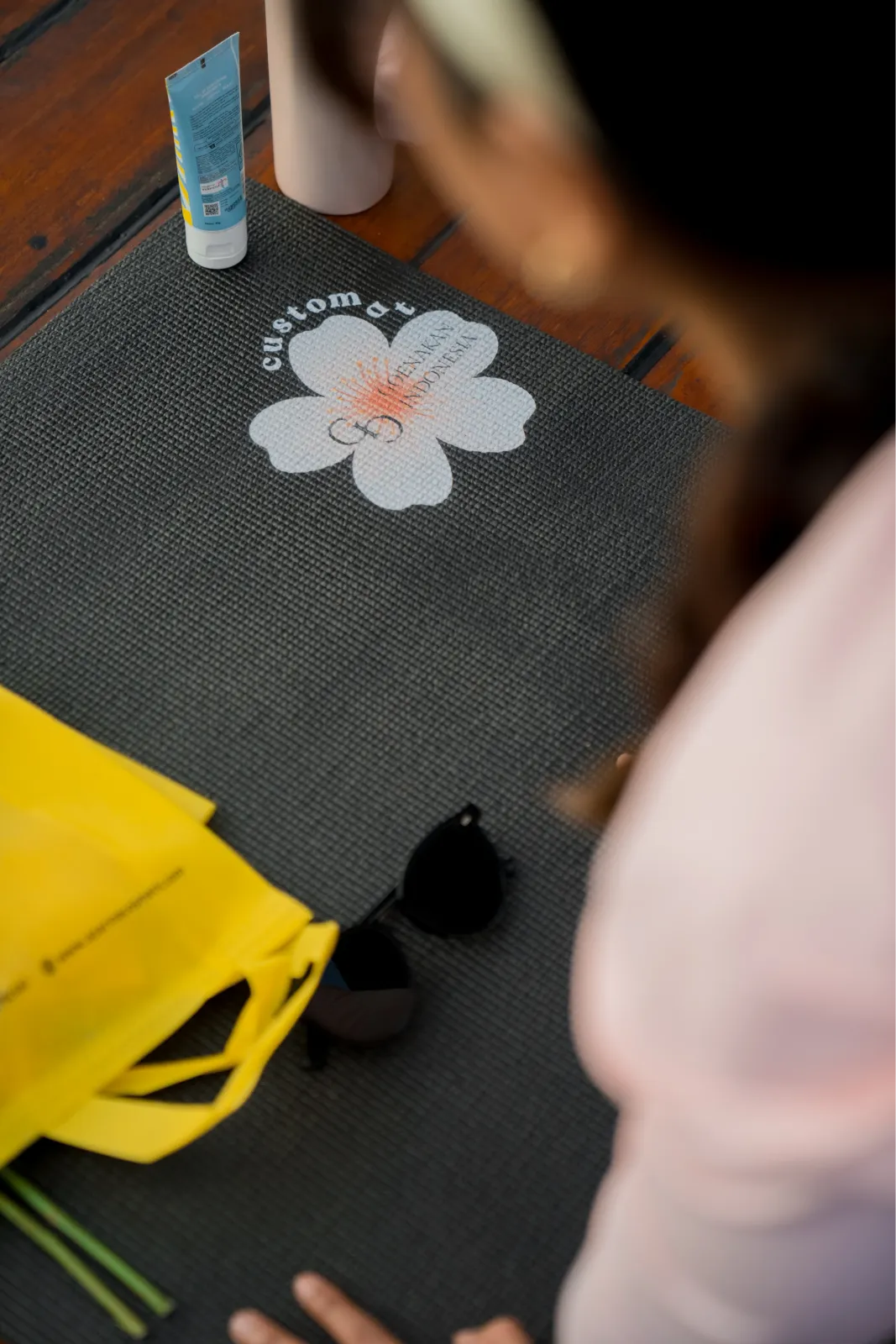
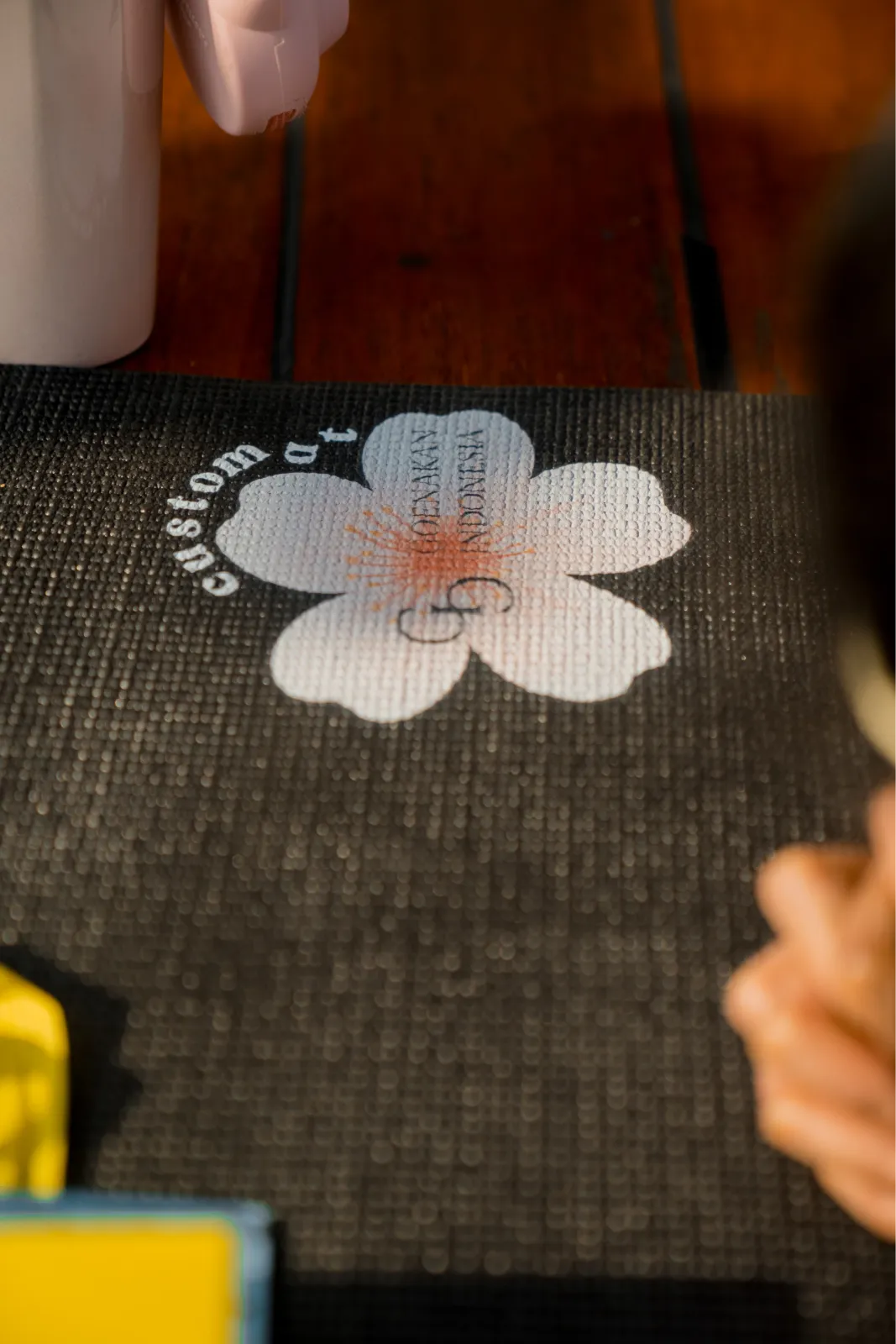
On September 26, 2026, a Pilates session was held on a wooden deck by the Bali seaside. The mats loaned to participants were black, featuring illustrations of white daisies and text highlighting the event’s concept, complete with custom branding by Goenakan Indonesia. Azarine Community also shared a recap of this session, including the yellow goodie bags that participants used on their respective mats.
Maiin x FitHub Yoga Session at Maiin Gandaria, Jakarta
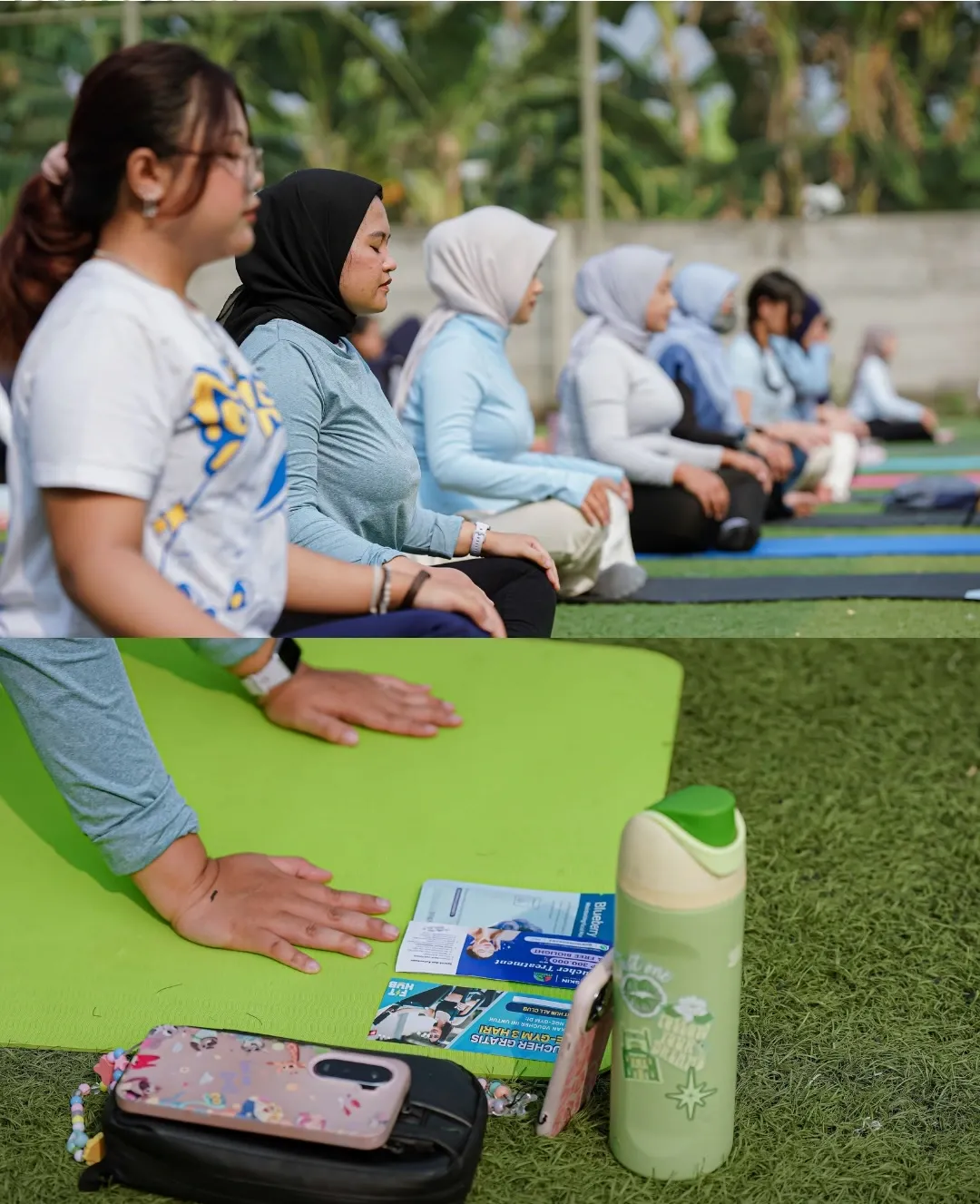
This yoga session took place on an open grass field—a setting very different from a studio. The event was supported by several brands, including Goenakan Indonesia, with Event Jakarta serving as the media partner. Maiin Gandaria posted a recap in October 2026.
From all the events above, it’s clear that yoga mats were used in a variety of settings—from ship decks to wooden decks by the sea and grassy fields—which highlights why mats need to be tailored to the event location. Since the loaned mats are used by multiple people, ease of cleaning and the durability of the material are also key factors. The next section discusses how to choose the thickness and material while taking these factors into account.
Key Differences Between Yoga Mats and Pilates Mats to Understand Before Customizing
At first glance, they seem similar, but their functions differ.Pilates Anytime explains that yoga mats are designed to prevent feet from slipping during poses, while Pilates mats are designed to protect the spine and joints, so they are typically thicker and more supportive.
This difference is evident in the movements. Yoga involves many standing poses that require a stable footing, while Pilates often uses rolling movements on the back that require cushioning. Before placing an order, first determine the type of class that will be held at your event. If the session is a mix of both, choose a middle-ground specification, which will be discussed in the following section.
The Right Thickness for Event Participants
Thickness is the first thing participants look for when trying out a mat. According tothe Yoga Design Lab guide, the generally recommended thickness for yoga ranges from 3.5 to 5 mm, whereas Pilates practitioners often choose thicker mats—sometimes up to 10 or 12 mm—to protect the spine during repetitive movements.
For dual-purpose use, another guideline from the same source cites a 6-mm mat as a reasonable compromise, while 8 mm is commonly used for Pilates. It’s also important to note that mats that are too soft are not recommended for standing poses because they reduce ankle stability, as explained in this mat thickness review. Here’s a brief summary.
Type of Session | Commonly Chosen Thickness | Notes |
Yoga with many standing poses | 3.5–5 mm | More stable, easy to roll up and carry |
Mixed yoga and Pilates classes | About 6 mm | A balance between cushioning and stability |
Pilates on the floor | 8 mm or more | More comfortable for the back, but bulkier to carry |
One more note: material density is just as important as the millimeter measurement. Two mats of the same thickness can feel very different, so request a physical sample before mass production.
Mat Material Options: TPE, NBR, PVC, and Natural Rubber
The material determines weight, grip, durability, and environmental impact.A comparison of mat materials from Lazada describes PVC as a petroleum-based plastic that is difficult to recycle, while natural rubber and cork come from renewable plant-based materials. TPE falls somewhere in the middle: it’s often marketed as a more recyclable material, but in reality, recyclability depends on local recycling facilities.
NBR is a soft synthetic rubber foam and is typically made thicker—around 10 to 15 mm—according to this review of exercise mat materials. This option is suitable for floor sessions that prioritize comfort, but it’s less practical if the mats are shared and participants have to take them home via public transportation.
Natural rubber provides good grip, but it’s heavier, which affects shipping costs and portability—both for participants and the team transporting it to the venue. People with latex allergies are also advised to avoid it, as noted in this mat material guide. If your event’s audience is very diverse, synthetic materials like TPE are generally a safer choice in this regard.
Recommendations for Custom Yoga and Pilates Mats Based on Event Type
Here are three common configurations to consider, tailored to on-site needs such as varying floor types and heavy usage, with notes on both rental and sharing schemes.
Mass classes in open spaces or fitness festivals. Choose a thickness of 5 to 6 mm with TPE material. It’s lightweight, stable enough for standing poses, and comfortable for floor movements. If the mats are being loaned out, choose a surface that’s easy to wipe down and dries quickly between sessions. If they’re being distributed, add a plain strap so participants can easily take them home.
Pilates sessions hosted by a sponsor brand in a studio or enclosed space. A thickness of 8 to 10 mm is more comfortable for rolling movements. Since mats of this thickness are larger, plan transportation to the venue carefully. If the mats are given away, also prepare a plan for packing and distribution at the end of the session.
Gifts for clients or business partners. For B2B needs, the quality of materials and packaging is prioritized over quantity. A thickness of 4 to 6 mm with premium-feeling materials, plus personalization with the recipient’s name or company logo, makes the gift feel thoughtfully chosen. Be sure to inquire about the material composition, as some recipients may have allergies.
Branding Techniques and Logo Placement for a Clean Look
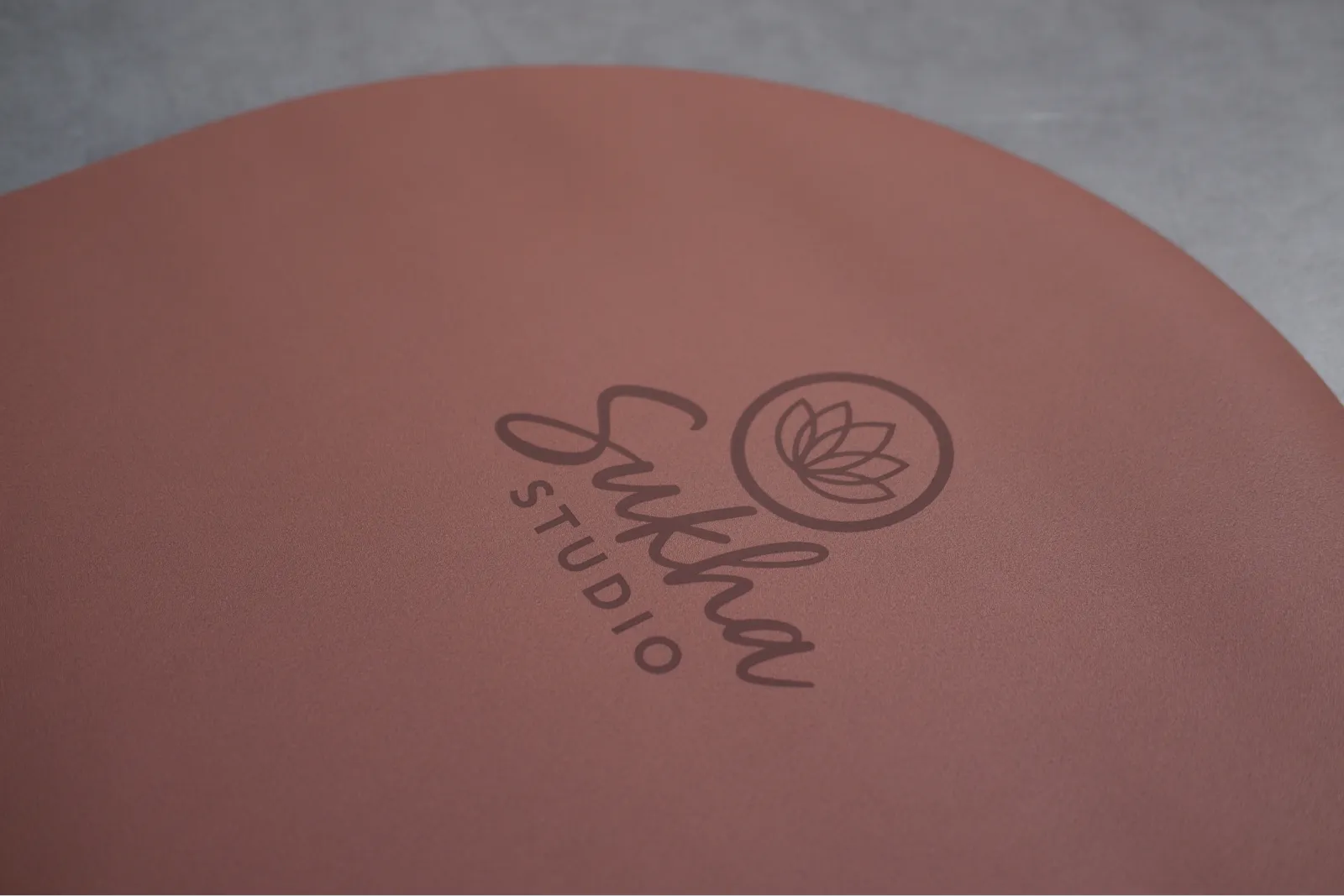
A logo that looks good on screen doesn’t necessarily hold up well on the surface of a mat. Commonly used techniques include screen printing, digital printing or heat transfer, as well as embossing or engraving, and their suitability varies depending on the material. Ask the vendor directly which technique is most resistant to friction, sweat, and cleaning for your chosen material. If the mat is loaned out and used repeatedly at many events, resistance to frequent cleaning becomes even more important.
Regarding placement, consider two scenarios: when the mat is unfolded and when it’s rolled up. The main logo should be placed in an area not covered by participants’ bodies, while a smaller logo at the end of the roll should remain visible when the mat is carried. Don’t forget to consider color contrast, as a light-colored logo on a pale-colored mat can easily get lost in photos.
Checklist Before Ordering Custom Mats for Sponsorship
To ensure the ordering process goes smoothly, prepare the following before contacting the vendor.
• Type of class and estimated number of participants; this will determine the thickness and quantity of the order.
• Preferred material and whether any participants have latex allergies.
• Mat size, base color, and a high-resolution logo file.
• The chosen arrangement: whether the mats will be loaned out during the event or distributed to participants, including who will transport and clean them.
• Any necessary accessories, such as straps or bags, as well as packaging, if the mats are to be distributed.
• Event date and production deadline, including a buffer period for sample approval.
• Request for a physical sample or mockup before mass production.
Frequently Asked Questions
Can a single yoga or Pilates mat be used for both classes?
Yes. The 6 mm mat is often chosen for dual use because it’s still stable enough for yoga and soft enough for Pilates. If your event focuses clearly on one of them, a specific thickness will feel more comfortable.
Is it safe for beginners to use this mat?
The mat isn’t the determining factor for safety—it’s your technique and physical condition.Alodokter recommends that beginners maintain a consistent practice, avoid pushing themselves too hard, and consult a doctor if they have specific health conditions. You can include this brief message in your event materials.
How do you care for a custom mat so the logo lasts?
Generally, mats should be wiped down with a damp cloth and mild soap, then air-dried in the shade. For mats used by multiple people, wipe the surface after each session. Avoid harsh cleaning agents and prolonged exposure to direct sunlight. Also follow the manufacturer’s care instructions, as different materials react differently.
It’s Time to Create Custom Mats That Are Comfortable to Use and Easy to Remember
If you’re planning merchandise for a sponsored event, Goenakan Indonesia is ready to be your trusted vendor for custom souvenirs and merchandise to bring your vision to life. You can customize the logo, colors, size, and even complementary accessories so the final product aligns with your brand identity. We can also discuss the distribution plan—whether the mats will be loaned out during the event or distributed to participants—while eco-friendly product options are available for brands looking to incorporate sustainability into their campaigns.
The consultation process will be tailored to your needs—from selecting suitable materials and printing techniques, reviewing design mockups before production, to ensuring the quantity and packaging meet your event’s requirements. This way, the mats at your event will be comfortable for participants to use and will showcase your brand in every photo and video they share.